Cattery: Software Built for Feline Care
Cats aren't small dogs. They need their own space, their own rhythm, their own system. The Kennel Manager is built for catteries, not adapted from kennels.
Running a cattery isn't just managing units and bookings. It's managing feline anxiety, medical complexity, dietary sensitivities, and the unique needs of cats in an unfamiliar environment. The Kennel Manager is different — every feature is built around cat care.
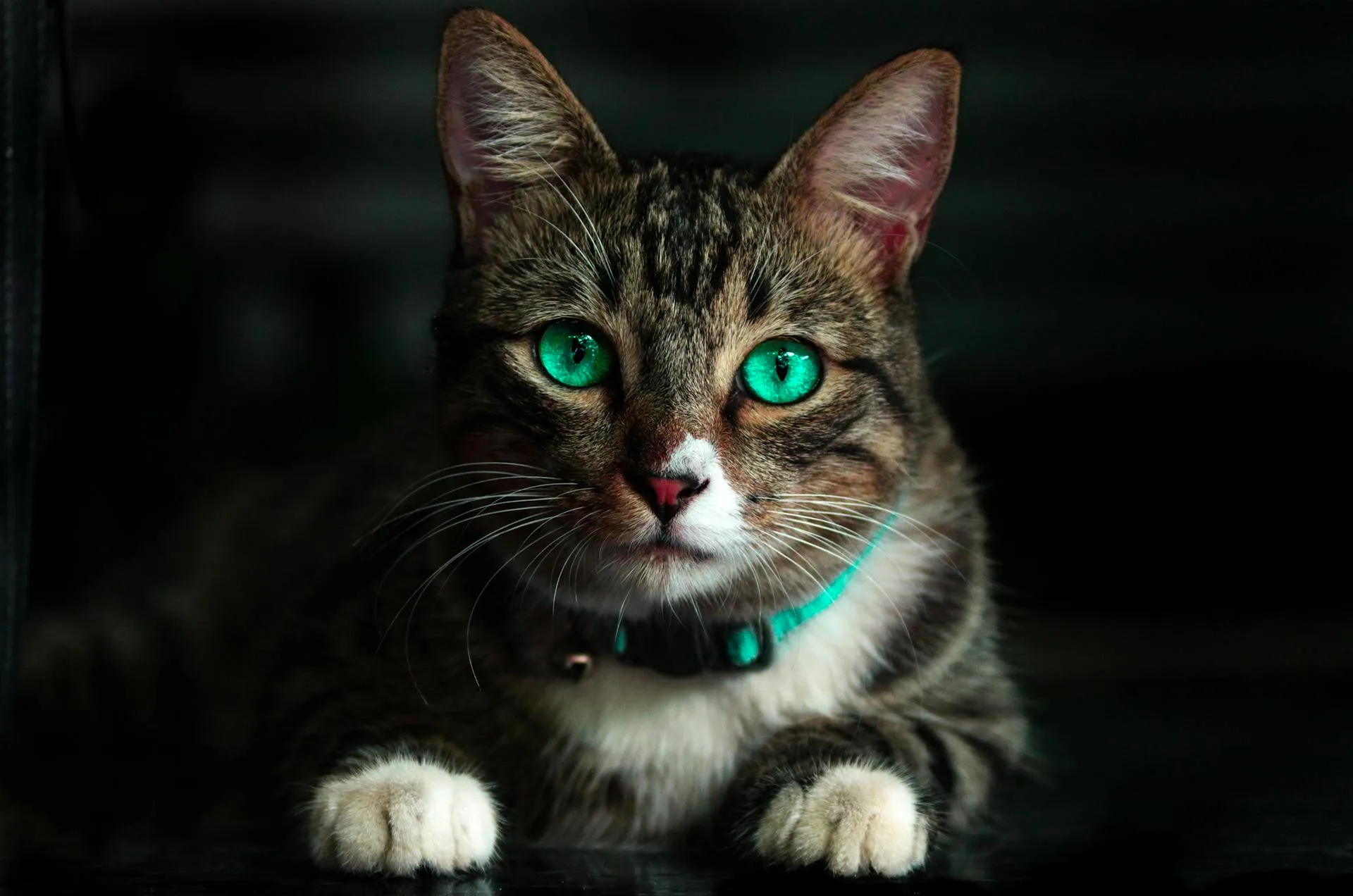
Understand each cat's personality and stress signals
A stressed dog barks. A stressed cat hides, stops eating, or becomes quiet and withdrawn. You can miss it if you're not looking carefully. By documenting baseline behaviour and tracking changes, you catch problems early — see our guide to recognising and reducing stress in boarding cats.
Configurable Check-In
- Baseline behaviour — normally outgoing or shy?
- Stress signals — ears back, dilated pupils, excessive grooming
- Eating habits — preferred food, will it eat if nervous?
Early Warning
- Hiding spots, litter box habits, medications documented
- Compare daily behaviour against the cat's baseline
- Catch problems before they become serious
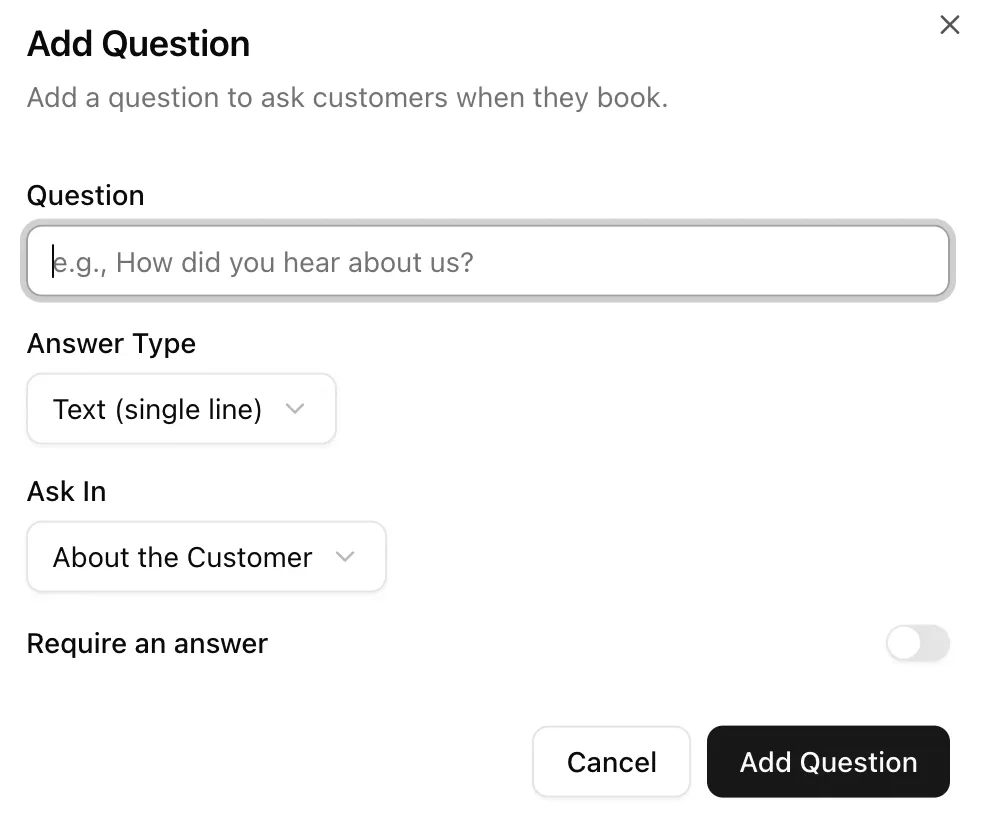
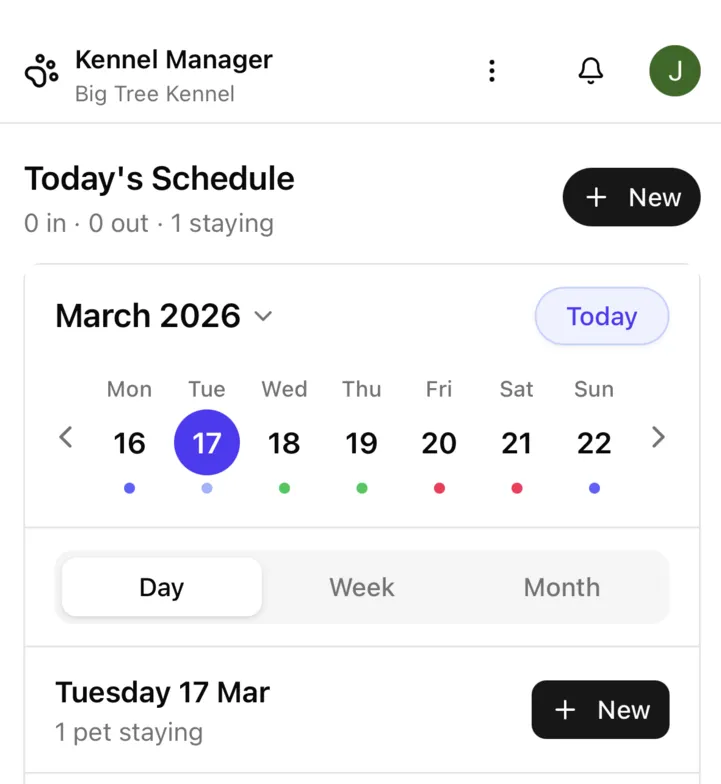
Track food and water intake for stressed cats
Cats are notorious for not eating when stressed. A cat not eating for 48 hours can develop hepatic lipidosis, a serious liver condition. Your job during a cat's stay: keep an eye on eating and drinking.
Daily Intake Log
- Food log — full bowl, half bowl, barely touched
- Water intake observation — is the cat drinking regularly?
- Alerting if a cat hasn't eaten normally for 24 hours
Owner Updates
Share food and water observations with the owner: “Bella ate well today, drank normally.” Your team doesn't rely on memory — they see what was documented yesterday and know what's normal for this specific cat.
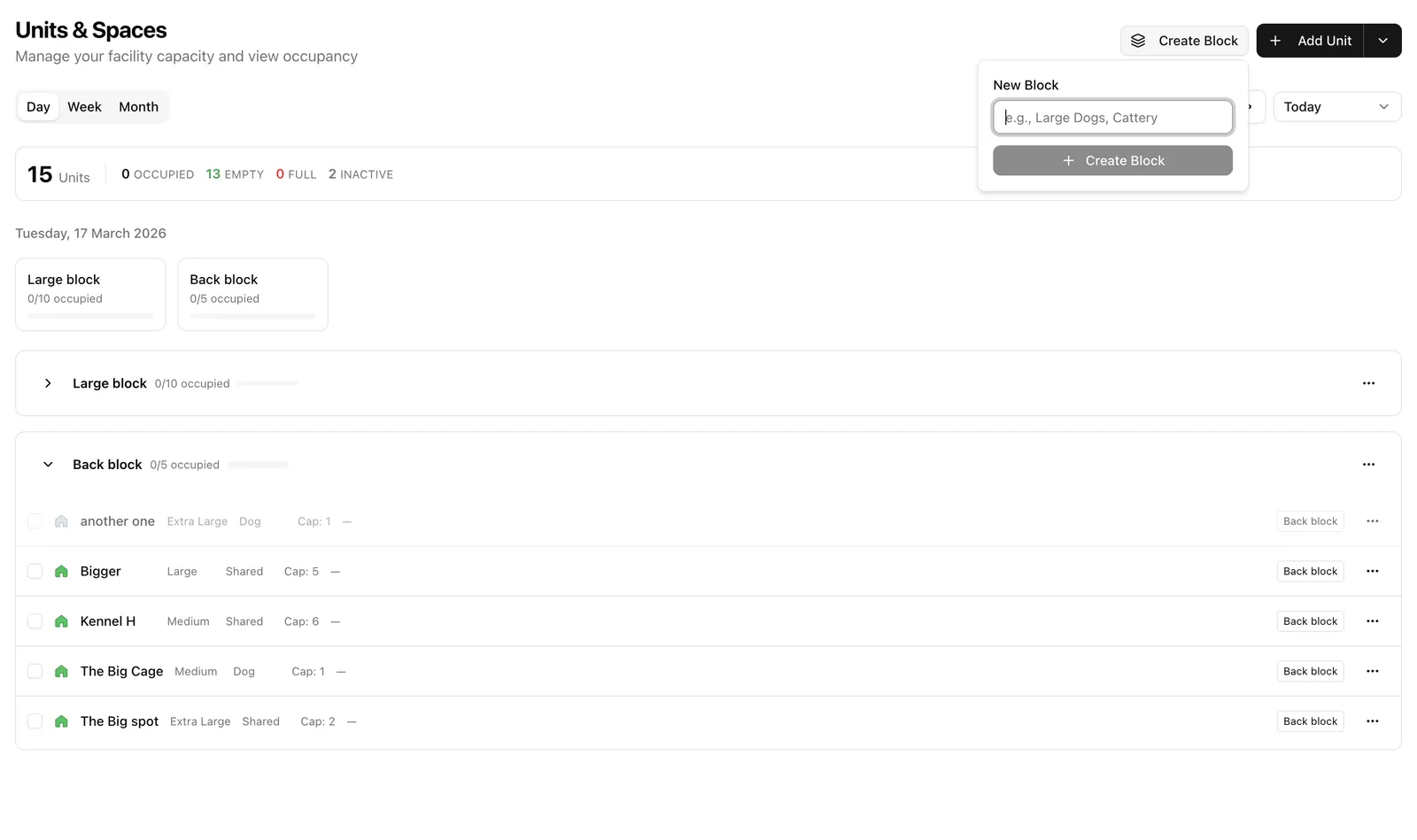
Separate units, separate cats, minimal stress
Cats cannot share space comfortably. Each cat needs its own unit. This changes your capacity calculation, your pricing, your space management.
Cat-Specific Units
- Unit type by species — cat units are separate from dog kennels
- One cat per unit — no double-booking, no shared space
- Separate pricing — cat units can have different rates
Enrichment Tracking
Note enrichment provided to each cat: climbing shelves, window perches, toys available. Your cattery operates as a dedicated system from any dog boarding you might also do.
Keep cats calm during transitions
Drop-off and pickup are stressful times for cats. The owner is anxious. The cat is anxious. You're trying to check the cat in quickly but also carefully. Policy conversations — like whether a kitten is old enough to board, or which vaccinations you require — belong at booking time, not at the desk: see our guides to setting a minimum-age policy for kittens and cat boarding vaccinations.
Streamlined Check-In
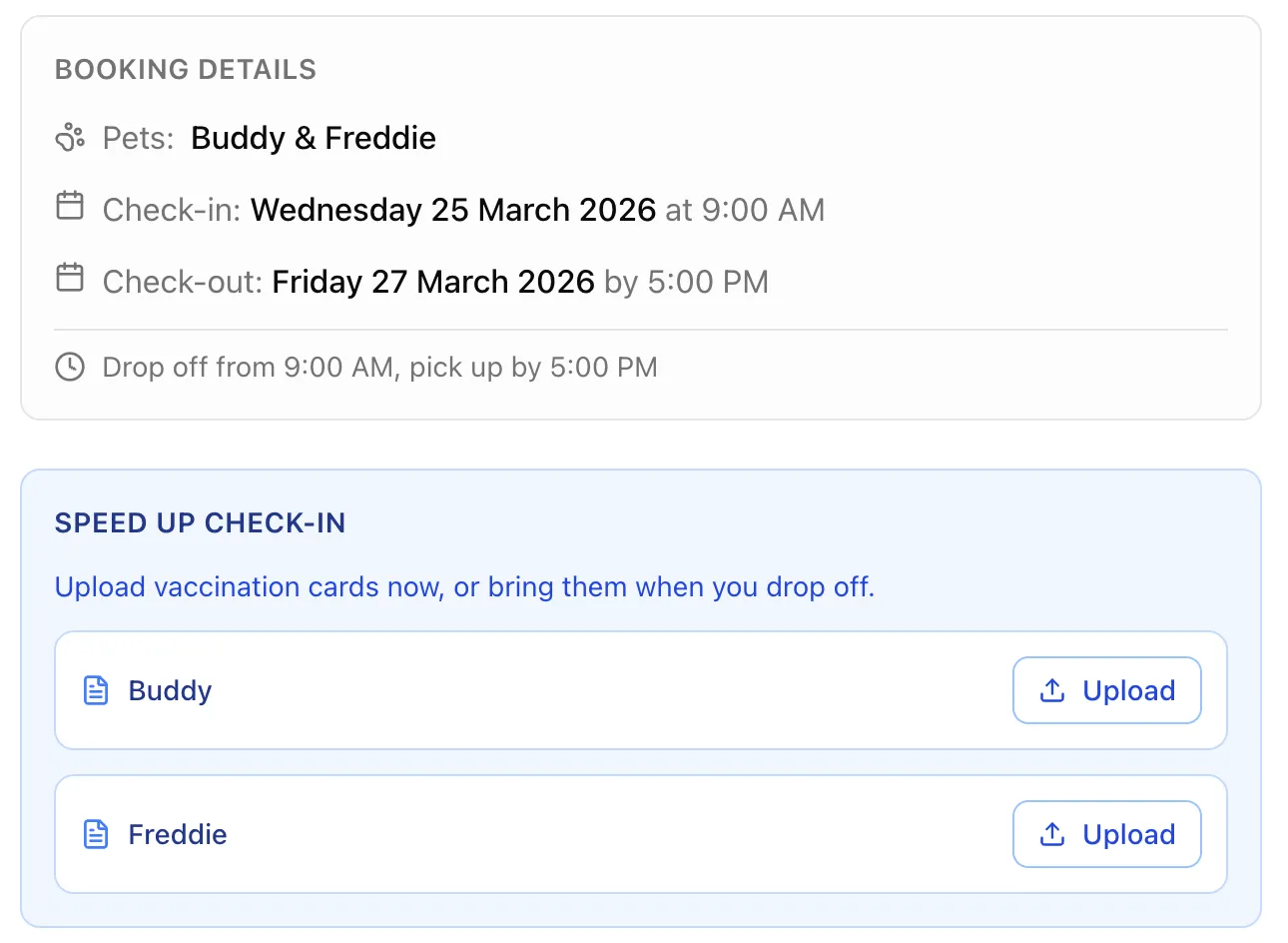
- Owner completes a cat-specific form on their phone the day before
- By the time they arrive, you know everything — no scrambling for forms
- Quick, calm check-in — cat settles at its own pace
Owner Confidence
They've provided all the information. You've documented it. You've shown you understand their cat's needs. Check-in goes from stressful to calm.
Daily observations that tell the real story
A cat's wellbeing during a stay isn't just “no incidents.” It's the small daily observations: Is it grooming normally? Using the litter box? Eating enough?
Daily Log Per Cat
- Litter box usage — normal, constipated, no usage (red flag)
- Activity level — playful, normal, withdrawn, lethargic
- Grooming — normal, excessive (stress), or absent (illness)
Stay Summary
Over 5 nights, observations build a picture. Owners see: “Mittens was shy on arrival, but by day 3 she was playing with toys and eating well.” This reassures owners and protects you.
Handle mixed facilities with separate workflows
Some facilities run both dogs and cats. Your dog kennels operate on one rhythm. Your cattery operates on a completely different rhythm. You shouldn't force them into the same system.
Separate Systems
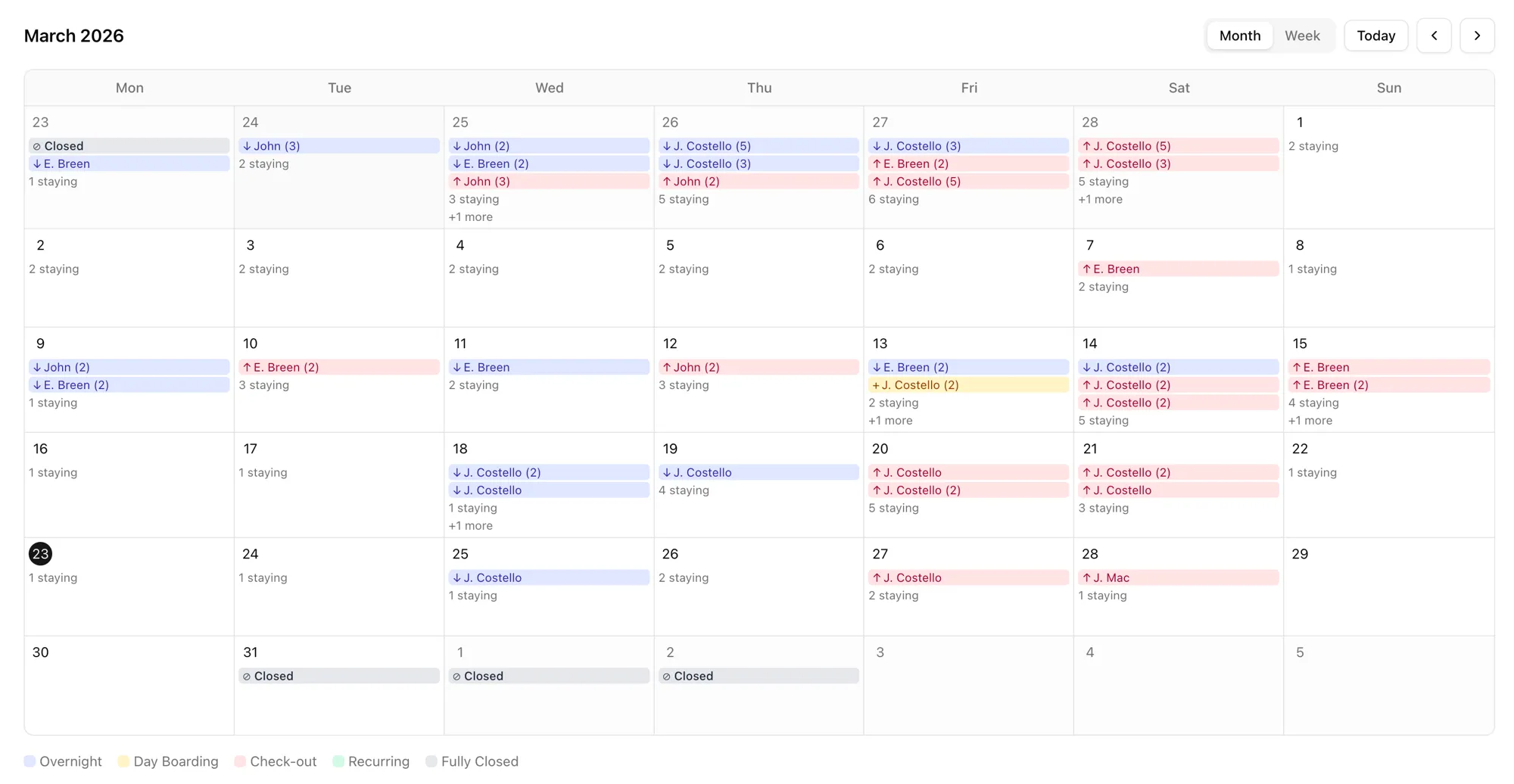
- Separate booking calendars — dog and cat don't conflict
- Species-specific check-in with different questions
- Separate pricing structures for dogs and cats
Unified Reporting
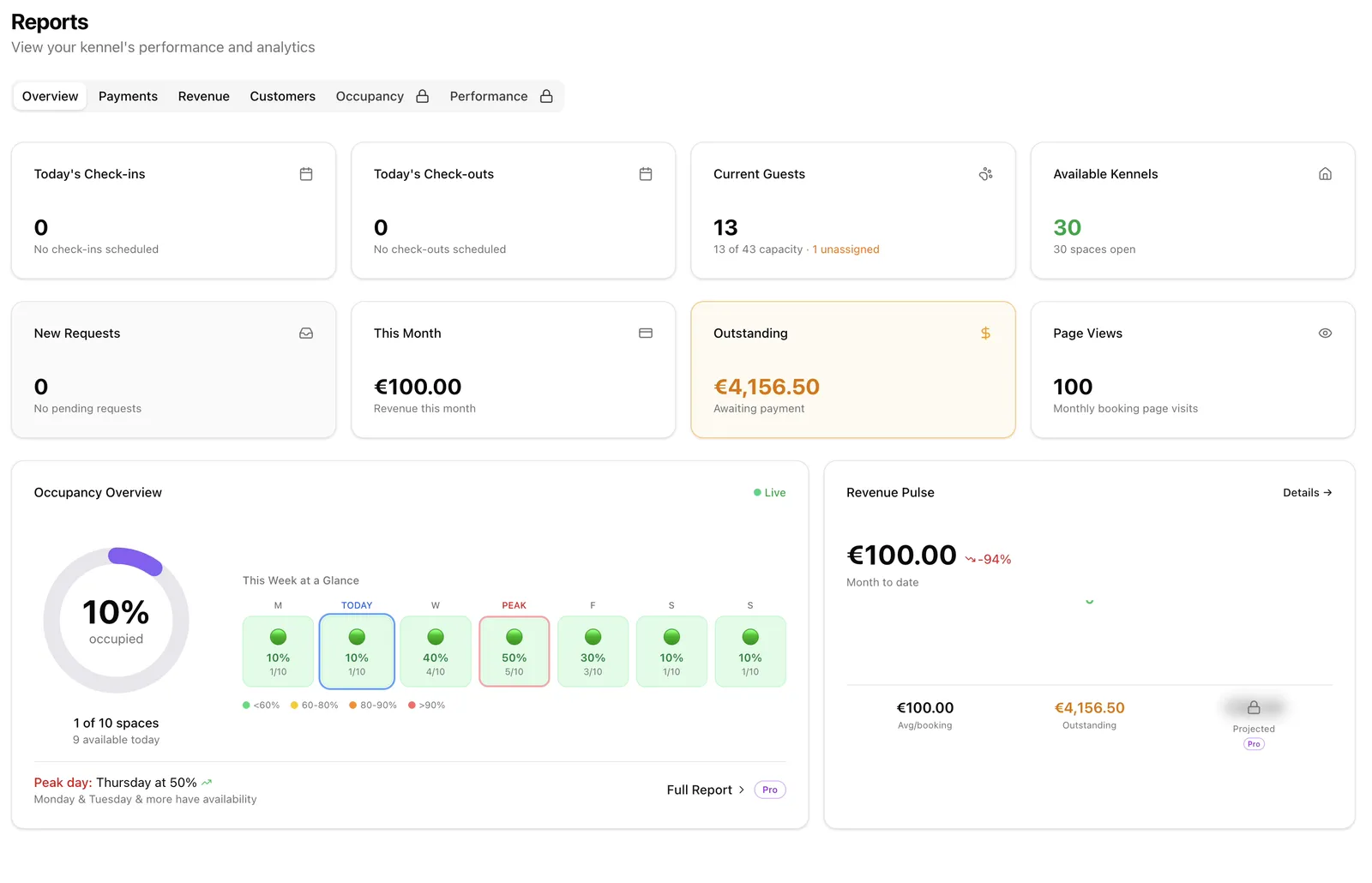
See occupancy, revenue, and metrics separately for dogs and cats — or combined for a full picture of your facility.
Premium pricing for premium care
Cattery fees are often higher than dog boarding. You're providing individual units, more observation time, specialised stress management, and veterinary knowledge specific to cats. And when you're fully booked, a waitlist turns cancellations into replacement bookings — see our guide to cattery revenue optimization using waitlists.
Cattery Pricing
- Species-specific rates — set independently from dog rates
- Per-cat pricing — one cat, one unit, one rate
- Seasonal flexibility — premium peak, discounts off-peak
- Add-on services — special food, medication administration, enrichment
How The Kennel Manager fits your cattery day
Before arrival
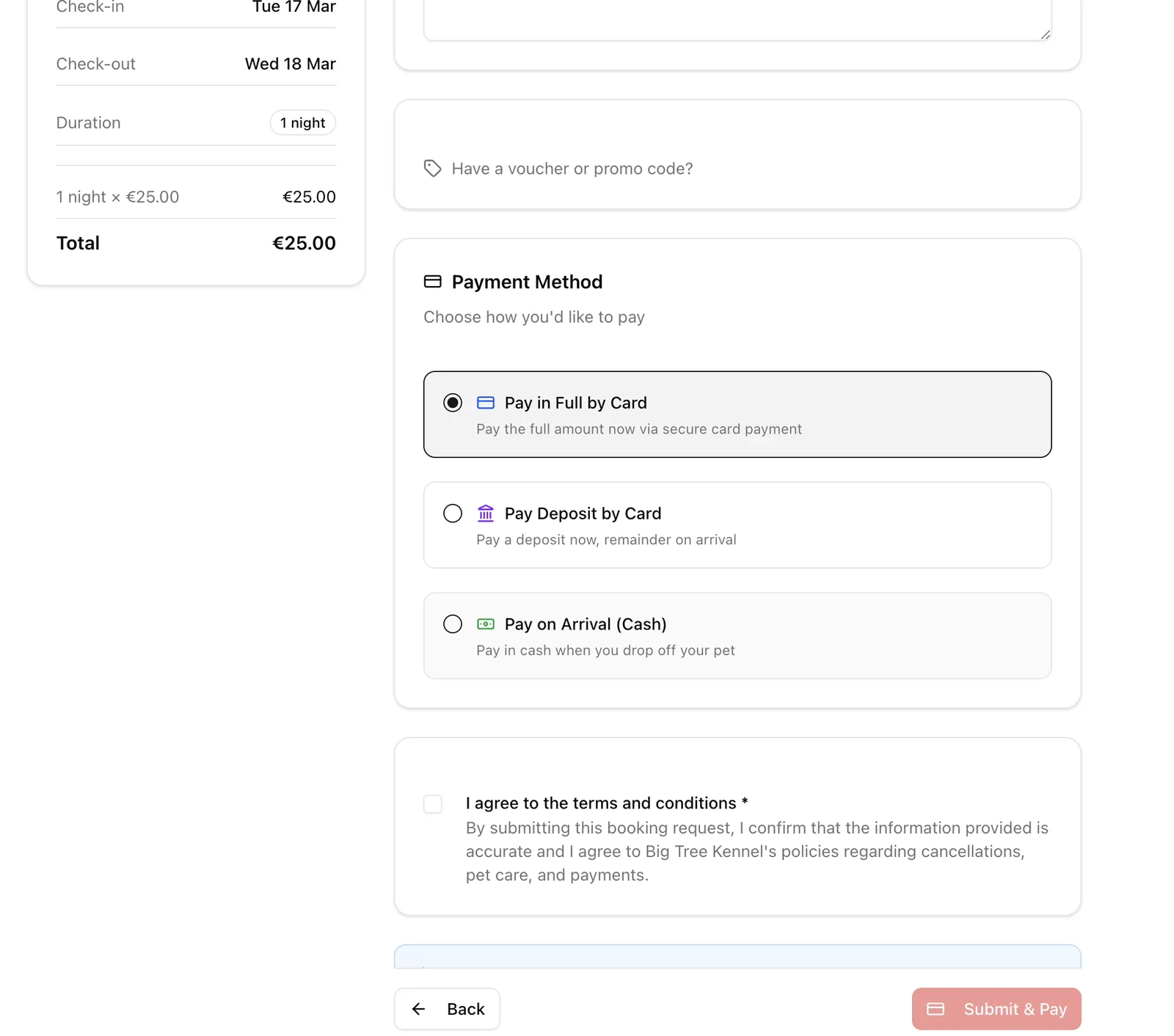
Customer books online. Booking appears in your cattery calendar. You send a detailed cat-specific intake form. Deposit collected. Pet profile complete.
At arrival
Review the intake form. Perform cat-specific check-in — baseline behaviour, stress signals, food preferences. Place the cat gently in its unit and let it settle.
During the stay (morning)
Staff see which cats are in care, medications due, notes from previous shifts. Observe eating, litter box, activity. Log daily observations. Send owner updates.
During the stay (evening)
Evening staff see morning observations. Check on cats, note who's eating, who might be stressed. If a cat hasn't eaten for 24 hours, alert the owner.
At pickup
Show the owner the stay summary: daily observations, photos, notes on how their cat coped. Process payment. Owner feels their cat received excellent care.
Professional presentation
Online booking, systematic check-ins, clear invoices, detailed owner communications. You're not just running a cattery — you're running a professional cat care facility.