Kennel Software vs. Cattery Software: 10 Tells That a Platform Was Built for Dogs
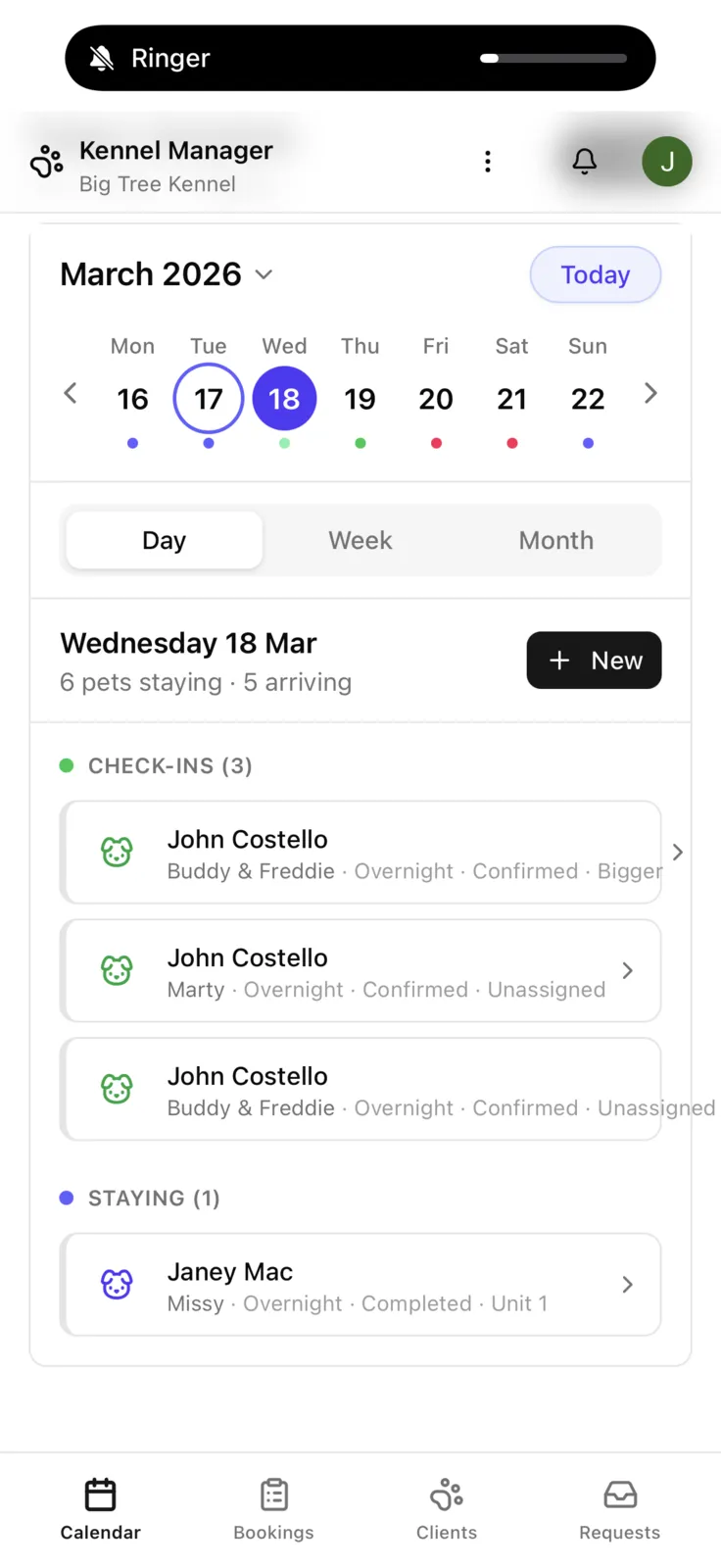
Most “pet boarding software” is kennel software with the word “pet” in the marketing. That's not an insult — it's a history: these products grew up around dogs, and cats arrived later as a checkbox. If you run a cattery, here are ten tells that reveal what a platform was actually built for — and what the cat-literate version of each looks like.
The ten tells
- Kennel cough on a cat's form. The instant giveaway. Cats need the cat flu (FVRCP) vaccination tracked; a platform built for cats never shows a cat owner a dog vaccine.
- “Extra walks” offered for a cat. If the add-on catalogue doesn't know cats don't go for walkies, the species support is a label, not logic.
- Any two cats can share a pen. No household concept, no consent capture — just a capacity shortcut. Built for cats means one-cat-per-unit by default, sharing only within a family, with documented consent.
- No kitten age screening. The four-month rule is cattery basics; software that can't ask it makes you enforce it at the front desk.
- FeLV/FIV doesn't exist. A cat-literate intake can ask about it and route a “yes” to a conversation instead of a rejection.
- Capacity is a headcount. Cat capacity is units and household groups, not number of animals in the building.
- Multi-cat families pay full price unless cats share. Wiring the family discount to shared floor space penalises correct cat housing.
- Every screen says “kennel.” Terminology is small until your customers see their cattery called a kennel on their own booking page.
- The example pet is always a dog. Placeholder names, empty-state illustrations, onboarding copy — if every default assumes a dog, so did the roadmap.
- One intake form for every animal. Cats need different questions — stress baseline, litter habits, hiding preferences — not a dog form with “species” at the top.
Why the tells matter
None of these is individually fatal. Together they compound into a daily tax: you re-explain your policies to your own software, work around fields that don't apply, and present customers with forms that quietly say “dogs first.” Cat owners — a famously detail-attentive audience — read those signals on your booking page and draw conclusions about your facility, fairly or not.
Where we stand
We built The Kennel Manager to pass all ten — species-scoped vaccinations and questions, household-only sharing with consent, unit-based capacity with flexible spaces, family pricing that doesn't punish separate housing, and a product that greets a cattery with cats: cat illustrations, cat examples, cat services, cat terminology. Yes, it's called The Kennel Manager — we're aware of the irony, and we decided the name matters less than the logic. Run the ten-tell test on us or on anyone. Your software should know what a cat is.