Cat Boarding Vaccination Requirements by Country: 2026 Guide
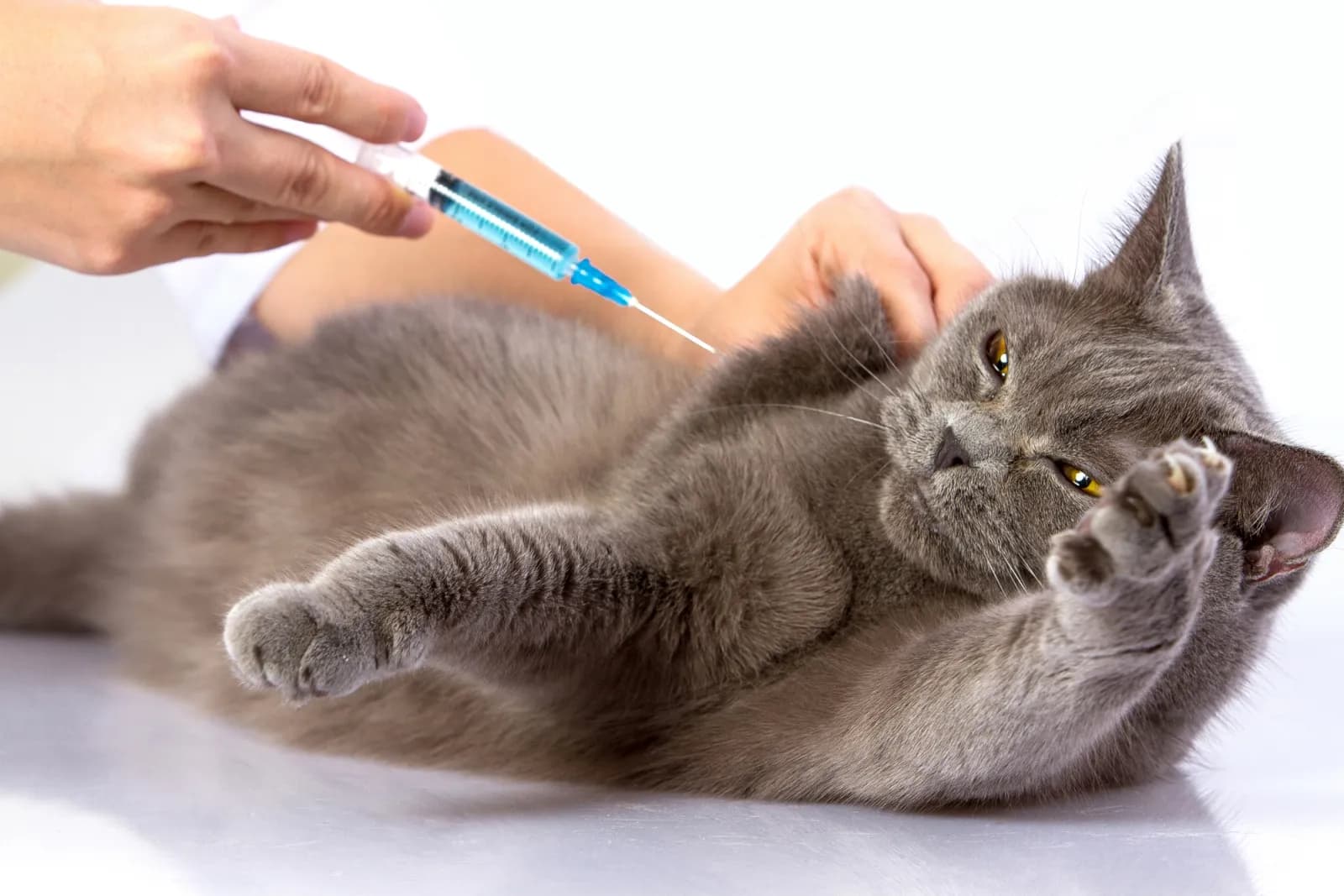
Planning a trip and arranging a cattery stay for your cat? One of the first things to check is whether your cat meets the cattery's vaccination requirements.
Cat boarding vaccination requirements are not identical everywhere. In some countries, boarding regulations name particular diseases against which cats must be protected. Elsewhere, the final decision is left largely to the individual cattery, often after consultation with its veterinarian.
Even two catteries in the same country may have different rules about accepted vaccines, booster intervals, titre tests and the evidence an owner must provide.
This guide compares common cat boarding vaccination requirements in England, Ireland, the United States and selected European countries. It is useful both for cat owners preparing for a boarding stay and for cattery operators reviewing their own policies.
Important distinction: This guide concerns cats staying in a cattery while their owners travel. International pet-travel rules, including pet passports, border checks and rabies documentation, are separate and may impose additional requirements.
What vaccinations do cats need for boarding?
The exact answer depends on the country, the individual cattery and the cat's veterinary history. However, the same diseases appear repeatedly in cat boarding vaccination requirements around the world.
Feline panleukopenia virus — FPV
FPV causes feline panleukopenia, also known as feline infectious enteritis, feline parvovirus or, in some countries, cat disease or cat plague.
It is highly contagious and can survive for long periods in the environment. The World Small Animal Veterinary Association classifies FPV vaccination as a core vaccination for cats worldwide.
Read the WSAVA vaccination guidelines
Feline herpesvirus — FHV-1
FHV-1 is one of the principal viruses associated with feline upper respiratory disease, often referred to more generally as cat flu.
Vaccination does not necessarily prevent every infection, but it can reduce the severity of disease. Because boarding places cats in an unfamiliar, multi-cat environment, FHV-1 commonly appears in cattery vaccination requirements.
Feline calicivirus — FCV
FCV is another major cause of feline respiratory disease and can also be associated with oral ulcers and other clinical symptoms.
Like FPV and FHV-1, FCV is considered a core vaccination by international veterinary guidelines and commonly appears in cat boarding vaccine requirements.
Rabies
Rabies vaccination is most often associated with international pet travel, but it is also legally required for cats in some parts of the United States.
In countries where rabies is not normally present, a cattery may not require it for a domestic boarding stay. It may still be relevant when a cat has recently entered the country or will cross an international border.
Feline leukaemia virus — FeLV
FeLV vaccination is generally based on the cat's age and exposure risk rather than being universally required for boarding.
US AAHA/AAFP guidance classifies FeLV as a core vaccination for cats under one year old and a risk-based vaccination for older cats. Other veterinary guidelines may treat it as non-core while recommending it for cats with outdoor access or possible contact with cats of unknown status.
Read the AAHA/AAFP feline vaccination guidance
Cat boarding vaccination requirements by country
The table below provides a broad comparison. The terms are deliberately cautious:
- Required means that a boarding rule or licensing standard specifically identifies the vaccine.
- Commonly expected means that veterinary or boarding guidance normally includes it, although the individual cattery sets the final policy.
- Travel-related means that it is primarily relevant to crossing borders rather than an ordinary domestic cattery stay.
| Country or region | FPV | FHV-1 | FCV | Rabies | FeLV and other considerations |
|---|---|---|---|---|---|
| England | Required by licensed catteries | Required | Required | Usually not required for domestic boarding | FeLV is not part of the national boarding minimum; titre evidence for FPV may be accepted at the cattery's discretion |
| Republic of Ireland | Commonly expected | Commonly expected as part of cat-flu protection | Commonly expected as part of cat-flu protection | Normally travel-related | FeLV requirements vary by cattery and veterinary advice |
| United States | Core and commonly required as part of FVRCP | Core and commonly required as part of FVRCP | Core and commonly required as part of FVRCP | Frequently required; state and local laws vary | FeLV is core for cats under one year in AAHA/AAFP guidance; facilities may impose additional rules |
| France | Commonly required as typhus | Commonly required as part of coryza protection | Commonly required as part of coryza protection | Usually travel-related for domestic boarding | The establishment chooses its required vaccines; some require FeLV |
| Germany | Commonly expected as protection against Katzenseuche | Commonly expected as part of Katzenschnupfen protection | Commonly expected as part of Katzenschnupfen protection | Usually travel-related | Further requirements are set by the individual boarding establishment |
| Netherlands | Expected for commercial boarding as kattenziekte | Expected as part of niesziekte protection | Expected as part of niesziekte protection | Usually travel-related | Some establishments additionally request Bordetella vaccination |
| Sweden | Part of the normal core vaccination programme | Particularly relevant in group environments | Particularly relevant in group environments | Usually travel-related | The boarding establishment sets its admission requirements |
| Denmark | Core vaccination | Core vaccination; annual revaccination may be recommended for boarding cats | Core vaccination; annual revaccination may be recommended for boarding cats | Risk- or travel-based | FeLV and Chlamydia are selected according to risk |
| Norway | Commonly expected, but determined by the facility | Commonly expected, but determined by the facility | Commonly expected, but determined by the facility | Usually travel-related | Owners should ask early enough to complete any required vaccination course |
Cat boarding vaccination requirements in England
Licensed cat-boarding businesses in England must inspect an up-to-date veterinary vaccination record for every cat they accept.
Cats must have current protection against:
- Feline panleukopenia or feline infectious enteritis.
- Feline herpesvirus.
- Feline calicivirus.
A veterinarian's certificate confirming a recent protective titre test may be accepted instead of an FPV booster, but the cattery can decide whether it accepts that evidence. Homeopathic vaccination is not accepted.
Read England's statutory cat-boarding guidance
Rabies and FeLV are not included in England's statutory minimum list for an ordinary domestic cattery stay. An individual business may still adopt additional requirements after consulting its veterinarian.
The detailed statutory guidance applies to England. Catteries in Scotland, Wales and Northern Ireland operate under different legislation and local arrangements, so owners should check the policy of the establishment they plan to use.
Cattery vaccination requirements in the Republic of Ireland
The Republic of Ireland does not appear to have a detailed nationwide cattery vaccination list equivalent to England's statutory guidance.
Irish veterinary information commonly identifies feline panleukopenia and cat flu as central vaccinations for cats, and boarding establishments generally expect vaccinations to remain current. Cat flu vaccination normally covers FHV-1 and FCV.
Read vaccination advice from Veterinary Ireland
Some Irish veterinary practices also include FeLV in their routine recommendations, but whether it is needed for boarding will depend on the cat's age, lifestyle and the individual cattery's policy. Rabies is principally relevant when a cat is entering Ireland from abroad or travelling internationally.
Cat boarding vaccination requirements in the United States
There is no single federal vaccination policy covering every US boarding facility. Rabies laws are set at state and local level, while catteries and veterinary boarding facilities establish their own admission rules.
US facilities commonly ask for an up-to-date FVRCP vaccination. FVRCP is the combined vaccine covering:
- Feline viral rhinotracheitis caused by FHV-1.
- Feline calicivirus.
- Feline panleukopenia caused by FPV.
AAHA/AAFP guidance classifies FHV-1, FCV, FPV and rabies as core vaccinations. It also treats FeLV as core for cats under one year old and risk-based for older cats.
The guidance notes that revaccination shortly before boarding may be appropriate for some cats entering a high-exposure or stressful environment, particularly when they have not been vaccinated during the previous year. This is a decision for the cat's veterinarian rather than a universal rule for every boarding stay.
Because requirements differ considerably, US owners should check both the cattery's policy and any applicable rabies rules well before the planned stay.
Cat boarding vaccination requirements in France
In France, the boarding establishment is generally responsible for deciding which vaccinations it requires as part of its disease-prevention procedures.
Many French catteries require protection against:
- Typhus, meaning feline panleukopenia or FPV.
- Coryza, commonly covering FHV-1 and FCV.
Some also require or recommend FeLV vaccination, particularly where cats may be accommodated in a more communal environment. Rabies is normally associated with international movement rather than an ordinary domestic boarding stay.
Owners should therefore check the establishment's règlement or admission conditions rather than assuming that every French cattery follows the same list.
Read French government guidance on arranging pet care
Cat boarding vaccination requirements in Germany
German veterinary guidance commonly advises that cats entering a reputable boarding establishment should have valid protection against:
- Katzenseuche, meaning feline panleukopenia.
- Katzenschnupfen, commonly referring to respiratory disease involving FHV-1 and FCV.
Owners should discuss any additional vaccinations required by the individual establishment with their veterinarian.
Rabies is usually relevant to international travel. FeLV or other requirements may be introduced by the cattery according to its facilities, accommodation model and assessment of infection risk.
Cat boarding vaccination requirements in the Netherlands
Dutch veterinary and consumer guidance says cats entering a commercial boarding establishment should be vaccinated against:
- Kattenziekte, meaning feline panleukopenia.
- Niesziekte, normally covering feline herpesvirus and feline calicivirus.
The veterinarian should record the vaccinations in the cat's passport or vaccination booklet, and the boarding establishment may need to retain the documentation during the stay.
Dutch veterinary guidance recommends more frequent vaccination against respiratory disease for cats that enter boarding because they experience greater exposure than a low-risk indoor cat. Some establishments also request vaccination against Bordetella bronchiseptica, although this is an additional cattery policy rather than part of the standard FPV, FHV-1 and FCV combination.
Where a cat's health or vaccination status is unknown or incomplete, Dutch rules for commercially held animals may require quarantine procedures.
Read Dutch government guidance for commercial animal establishments
Cat boarding vaccination requirements in Sweden
Swedish veterinary guidance includes FPV, FHV-1 and FCV in the normal core vaccination programme for cats.
Cats kept in larger groups, including cats staying in boarding establishments, should be vaccinated against feline respiratory disease. Vaccination can reduce the severity of illness, although it does not guarantee that a cat cannot become infected or transmit a respiratory virus.
The precise admission rule is normally set by the individual cattery. Rabies vaccination is principally relevant when a cat is travelling into or out of Sweden rather than remaining in a domestic boarding facility.
Cat boarding vaccination requirements in Denmark
The Danish Veterinary Association identifies FPV, FHV-1 and FCV as core vaccinations for cats.
For cats at increased risk of exposure, including cats entering boarding, more frequent revaccination against FHV-1 and FCV may be recommended. Adult cats at lower risk may have longer intervals between FPV revaccinations.
Rabies, FeLV and Chlamydia are treated as non-core vaccinations selected according to travel plans, local disease risk and the cat's lifestyle. A Danish cattery may nevertheless make one of these an admission requirement.
Cat boarding vaccination requirements in Norway
Norway does not provide one national list of vaccines that every cattery must require.
In practice, owners should expect the cattery to set its own policy around the standard core vaccinations against FPV, FHV-1 and FCV. The facility should be contacted early enough to complete any primary course, booster or waiting period before arrival.
Rabies is normally relevant to cats crossing the Norwegian border rather than cats remaining in domestic boarding.
Why do cattery vaccination requirements differ?
A vaccination can fall into several different categories:
- Required by national or local law.
- Required by a boarding licence.
- Recommended by a veterinary organisation.
- Required by the individual cattery.
- Recommended only for cats with a particular lifestyle or exposure risk.
These categories are not interchangeable.
For example, international veterinary guidance considers FPV, FHV-1 and FCV core vaccinations for cats around the world. That does not mean every country has passed a law requiring all three before boarding.
Similarly, a vaccination may not be legally required, but a cattery can still make it a condition of admission as part of its disease-control policy.
What does “fully vaccinated” or “up to date” mean?
These phrases can be frustratingly vague.
Clear cat boarding vaccination requirements should state:
- The specific diseases against which protection is required.
- Whether a complete kitten vaccination course is needed.
- Whether an adult booster must remain valid throughout the stay.
- How long before arrival the final vaccination must be given.
- What veterinary evidence the owner must provide.
- Whether titre-test evidence is accepted.
- Whether exemptions can be considered.
The correct interval is not always simply “every year”. Some vaccines provide longer-lasting protection, while respiratory-virus vaccination may be recommended more frequently for cats entering high-exposure environments.
The cattery should therefore define what it means by “current”, ideally in consultation with its nominated veterinarian.
How long before boarding should a cat be vaccinated?
Owners should check the cattery's policy before confirming their travel arrangements, particularly when:
- The cat is a kitten.
- Vaccinations have lapsed.
- The cat has never been vaccinated.
- The cattery requires a two-dose primary course.
- The cat has a medical reason for avoiding a booster.
- The owner intends to use titre-test evidence.
- Rabies vaccination may be required.
Different catteries impose different waiting periods after vaccination. A vaccination administered on the morning of check-in may therefore be too late, even when it makes the certificate technically current.
The safest approach is to ask the cattery what it requires and discuss any lapsed or unusual vaccination history with the cat's veterinarian well before the stay.
What vaccination evidence do catteries require?
A simple yes-or-no question — “Are your cat's vaccinations up to date?” — may not provide enough information.
A cattery may instead request:
- A photograph or upload of the vaccination certificate.
- The vaccination booklet or pet passport.
- The date of the most recent vaccination.
- The vaccine name or diseases covered.
- The veterinarian's stamp, signature or contact details.
- The expiry or next-due date.
- A titre-test certificate, where accepted.
- Confirmation that the records will remain valid for the full stay.
The vaccination record should be reviewed before the booking is accepted, not for the first time when the owner arrives with the cat.
How catteries can create a clear vaccination policy
1. Identify the legal minimum
Begin with the licensing and animal-health rules that apply in your own country, region or state.
Do not copy cat boarding vaccination requirements from a cattery in another country without checking whether its legal framework is relevant to you.
2. Agree the policy with your veterinarian
Your veterinarian can help determine:
- Which diseases present a realistic risk.
- Which vaccines should be required.
- Appropriate revaccination intervals.
- How to treat lapsed vaccinations.
- Whether titre tests can be accepted.
- What to do when vaccination is medically unsuitable.
- How long should pass between vaccination and boarding.
3. Use specific vaccine names
Avoid relying only on phrases such as “cat flu vaccine” or “all routine vaccinations”.
Name the relevant diseases and include locally familiar terms. For example:
Cats must have current protection against feline panleukopenia or infectious enteritis, feline herpesvirus and feline calicivirus.
In the United States, the same requirement may be communicated more simply as a current FVRCP vaccination.
4. Keep age and vaccination rules separate
A kitten can meet your minimum-age requirement without having completed the vaccination programme you require.
Your policy should therefore state both conditions clearly:
Kittens must be at least four months old on the first day of their stay and must have completed the vaccinations required by our cattery.
For more on selecting an age, see our guide to setting a minimum-age policy for kittens.
5. Explain what evidence is accepted
Tell owners whether you require:
- A physical certificate.
- A pet passport.
- A digital image.
- Direct confirmation from a veterinary practice.
- A titre-test certificate.
Also state when the evidence must be submitted and whether the booking remains provisional until it has been approved.
6. Decide what happens when the requirements are not met
A cattery might:
- Prevent the booking request from being submitted.
- Allow submission but flag the answer for manual review.
- Accept the booking provisionally while waiting for evidence.
- Decline the request.
- Refer a possible exemption to its veterinarian or manager.
Whatever process you choose, it should be documented and applied consistently.
Check the cattery's policy, not only the national guidance
National rules provide only part of the answer.
The cattery itself may impose stricter requirements because of its accommodation design, local disease risks, insurer, veterinarian or previous experience. It may also require parasite treatment, health declarations or testing that is separate from vaccination.
For cat owners, the safest approach is to ask for the complete admission policy as soon as you begin planning the trip.
For cattery owners, the objective is to create cat boarding vaccination requirements that are specific, evidence-based and easy to enforce before the cat arrives.
The Kennel Manager lets you add this and other questions to your booking process and decide whether an unsuitable answer blocks the request or simply warns your team during review.